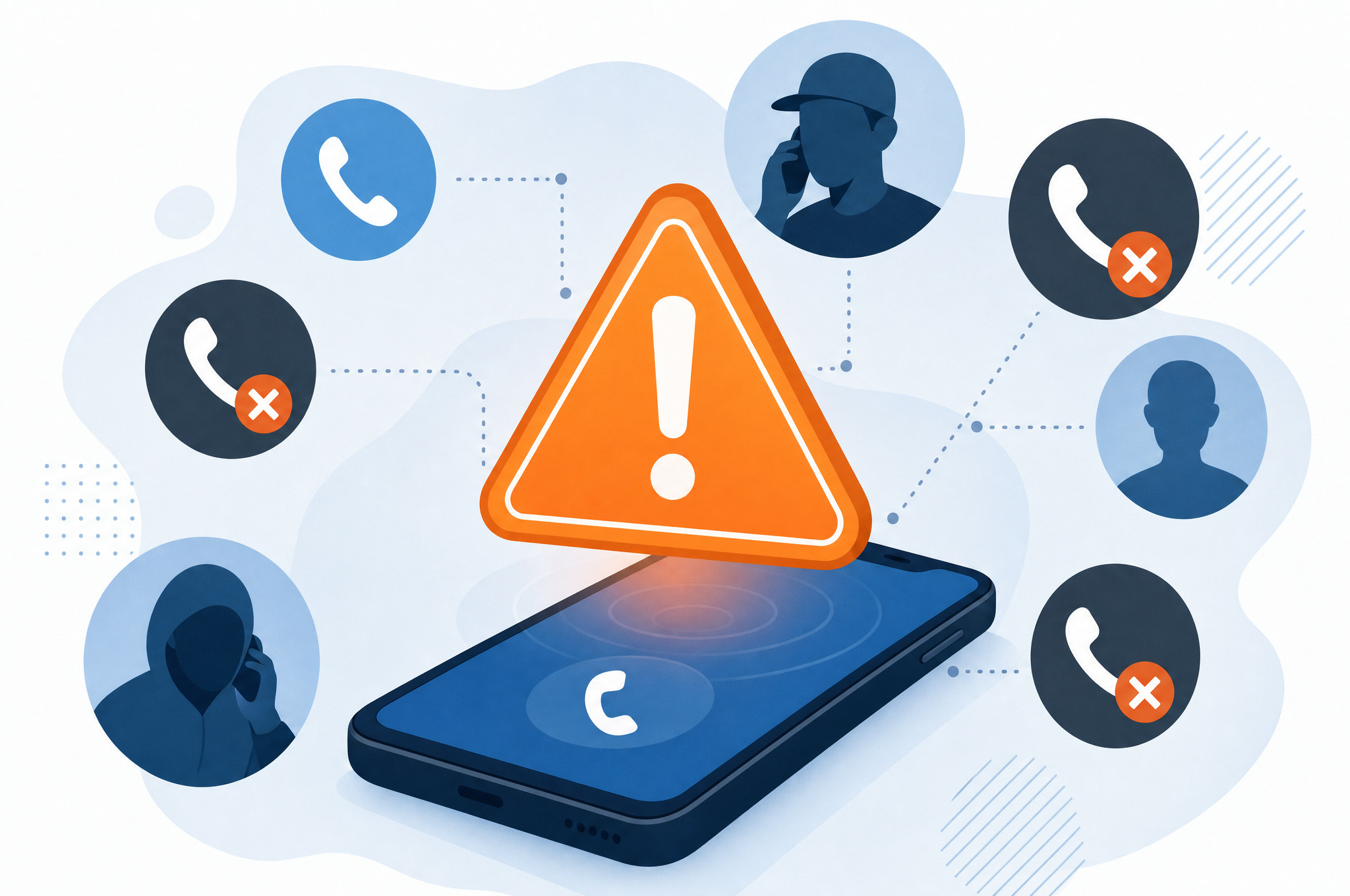
Scammers routinely purchase toll-free numbers (800, 888, 877, 866, 855, 844, 833) and create fake customer service lines that appear at the top of Google search results. If you call one of these numbers, the person who answers is not there to help you — they want to steal your money, your identity, or your account credentials.
Here's how the scam typically unfolds: You have a problem with a product or service. You Google "[Company Name] customer service phone number" and click on one of the first results. A number is listed prominently. You call it, and a polite "representative" answers. They ask for your account details to "verify your identity." They may request remote access to your computer to "diagnose the issue." They might ask for payment — often via gift cards or wire transfer — to "process a refund" or "fix a problem."
None of this is real. The number was never associated with the actual company. The "representative" is a scammer. And by the time you realize what's happened, they may have cleaned out your bank account, stolen your identity, or installed malware on your device.
This guide will teach you to recognize the warning signs, verify contact information properly, and protect yourself before you ever pick up the phone.
How Scammers Get Fake Numbers in Front of You
Understanding the attack vectors is the first step in defending against them. Scammers use several methods to make their fake numbers appear legitimate:
1. Search Engine Advertising
The most common method: scammers buy Google Ads that appear at the top of search results for "[Company Name] customer service." These ads look like legitimate results but contain a fake phone number. Google has policies against this practice, but scammers constantly create new ad accounts, and the cycle continues. The ads are often indistinguishable from legitimate company support pages at a glance.
2. Look-Alike Websites
Scammers build websites that mimic official company support pages. They clone logos, branding, and page layouts. The URL is slightly different — perhaps "support-[company].com" instead of "[company].com/support" — but if you're not looking carefully, you might not notice. These sites list fake phone numbers and sometimes include fake chat widgets that connect you directly to scammers.
3. SEO Manipulation
Beyond paid ads, scammers optimize fake support pages to rank organically in search results. They create content that targets high-intent search queries like "how to contact [Company] support" and stuff it with the company's name to rank well. These pages may look helpful but always include a fake contact number.
4. Forum and Community Hijacking
Scammers post fake support numbers in community forums, Reddit threads, and Q&A sites like Quora. They frame the number as "the direct line" or "the secret number that actually works." Unsuspecting users upvote these posts, giving them visibility and a false sense of credibility.
Red Flags: How to Identify a Fake Number
Before you dial any customer service number, watch for these warning signs:
The Number Appears in a Search Ad
If the phone number you're about to call came from a search ad — the "Sponsored" results at the top of Google — treat it as fake by default. Legitimate companies do run support ads, but the risk is too high to distinguish them from scams. Always go to the company's official website instead.
The Website Looks Slightly Off
Check the URL carefully. Scammers use:
- Extra words: "support-company.com" instead of "company.com"
- Misspellings: "companysupport.com" vs "company-support.com"
- Wrong TLD: "company-support.net" when the real site is "company.com"
- Subdomain tricks: "company.fake-site.com" — the real domain is "fake-site.com"
The "Agent" Asks for Sensitive Information
The strongest indicator of a scam. No legitimate customer service representative will ever ask for:
- Your full Social Security number (companies verify with last 4 digits only)
- Your bank account password
- A one-time authentication code sent to your phone or email
- Remote access to your computer or device
- Payment via gift cards, wire transfer, or cryptocurrency
Urgency and Pressure
Scammers create artificial urgency: "Your account will be permanently deleted in 10 minutes" or "This refund offer expires today." Real customer service representatives don't pressure you. If you feel rushed or threatened, hang up.
How to Verify a Customer Service Number
Use this verification process before calling any support number:
Step 1: Go to the Official Website Directly
Don't click a search result link. Type the company's official website URL directly into your browser's address bar. If you don't know it, check a printed statement, the back of your credit card, your email receipts, or the company's official mobile app.
Step 2: Navigate to the Contact or Support Page
Look for "Contact Us," "Support," "Help Center," or similar links — usually in the footer or top navigation of the official website. Legitimate companies list their verified phone numbers there.
Step 3: Use the Company's Mobile App
Many companies now route support through their official mobile apps, which may include in-app calling or chat. This is one of the safest channels because the app is verified through the official app store.
Step 4: Cross-Reference with Multiple Sources
If you find a number on the company's website, cross-reference it. Check your printed statement, the back of your card, or the company's verified social media profile. If the number matches across multiple official sources, you can be confident it's legitimate.
Step 5: Use Reverse Lookup Tools (With Caution)
You can use reverse phone lookup tools to research a number before calling. While these tools have limitations, they can sometimes reveal whether a number is associated with known scams. Just remember that absence of a scam report doesn't guarantee a number is safe.
What to Do If You've Already Called a Fake Number
If you realize you've called a potential scam line, take these steps immediately:
- Hang up. Don't try to confront the scammer or "warn" them — just end the call.
- If you shared financial information: Contact your bank or credit card issuer immediately using the number on the back of your card. Report the fraudulent interaction and request a freeze or new card.
- If you shared account credentials: Change your password for that account immediately. Enable two-factor authentication if available.
- If you granted remote access: Disconnect your computer from the internet, run a full antivirus scan, and consider having a professional check for installed malware.
- If you paid with gift cards: Contact the gift card issuer immediately — sometimes unused balances can be frozen, though scammers typically drain them within minutes.
- File a report with the FTC at reportfraud.ftc.gov and the FCC at consumercomplaints.fcc.gov.
- If your identity was compromised: Visit identitytheft.gov for a personalized recovery plan.
If you realized the number was fake before sharing any information, you're fine. No action is needed beyond reporting the fake number to help protect others. The FTC and FCC rely on consumer reports to track and shut down scam operations.
Why This Problem Is Getting Worse
Toll-free numbers are cheap and easy to purchase. Anyone can buy an 800 or 888 number for a few dollars per month. Scammers buy them in bulk, set up call centers (often overseas), and cycle through numbers as they get reported and blocked. By the time one fake number is shut down, the scammer has already moved to a new one.
Search engines and phone companies are fighting back — Google removes fake support ads when reported, and carriers implement caller ID verification (STIR/SHAKEN protocols). But the problem is whack-a-mole. The most effective defense is consumer education: knowing how to verify contact information before you call.
For more on protecting yourself from unwanted and fraudulent calls, see our guides on robocall blocking and reverse phone lookup tools. To learn about your rights when companies fail to respond properly, read our consumer rights guide.
The Bottom Line
The single most effective thing you can do to protect yourself from fake customer service numbers is this: never call a number you found in a search result. Always navigate to the company's official website by typing the URL yourself, or use the number printed on your statement or the back of your card. It takes 30 extra seconds, and it could save you thousands of dollars and months of headaches.
If you want to learn more about avoiding scams, visit our Scam Awareness Hub for a comprehensive overview of current scam trends and defense strategies.